Your child is laughing at cartoons. Looks harmless, right?
But here is the thing. That same screen can show violent videos, adult content, and toxic comments — all before you finish cooking dinner.
YouTube is the most-used platform for kids under 12. Yet most parents have no idea what their children are actually watching.
In this guide, you will learn exactly why YouTube is bad for kids, what the research says, and what safer options you can use starting today.
Quick Summary: YouTube exposes kids to harmful content, disrupts sleep, damages brain development, and uses an algorithm built to keep children hooked — not to keep them safe.
How Big Is the Problem? (The Numbers Will Surprise You)
Let’s start with a few facts. These numbers tell the real story:
- 80% of parents with children under 12 report that their child watches YouTube regularly.
- On average, a child watches YouTube for 74 minutes per day.
- 73% of teens use YouTube every day — more than any other platform.
- 1 in 5 children in the U.S. has a mental, emotional, or behavioral disorder.
These are not small numbers. This is a widespread issue affecting millions of families right now.
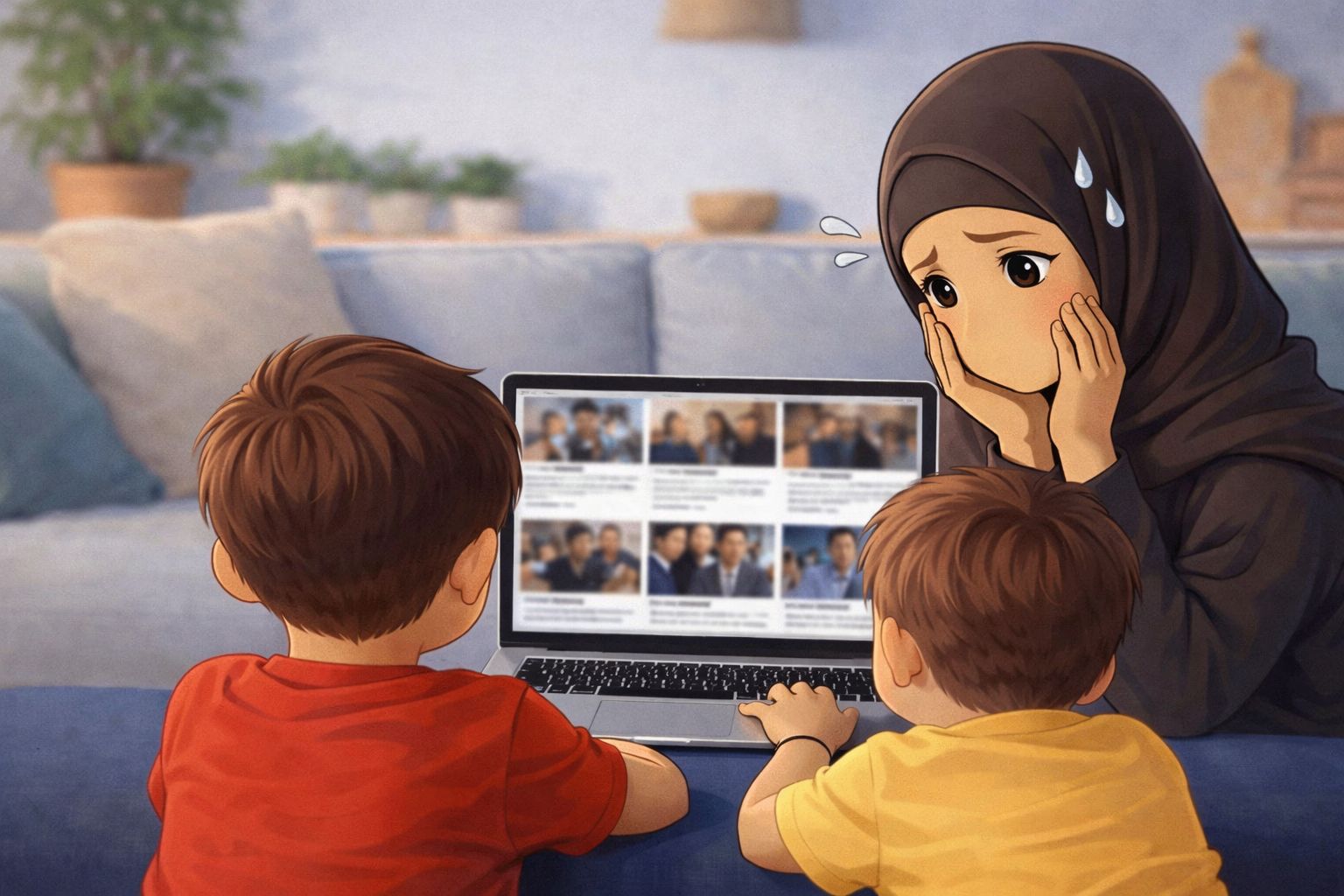
5 Reasons Why YouTube Is Bad For Kids
What looks harmless can quickly turn dangerous — here’s why YouTube isn’t as safe as you think.
1. The YouTube Algorithm Is Designed to Addict Your Child
YouTube’s algorithm has one job: keep people watching as long as possible.
It does not care if the next video is good for your child. It only cares if your child will click on it.
Here is how it works. Your child watches a cartoon. The algorithm notices. Then it suggests something slightly more exciting. Then more exciting. Before you know it, your child has gone from nursery rhymes to something totally inappropriate.
A 2024 study found that:
- The earlier kids start using YouTube, the more they use it as they grow older.
- Children who watch more YouTube have more emotional and behavioral problems.
- The algorithm actively increases how much children consume over time.
🔗 Source: BMC Public Health, Kim et al., 2024
The autoplay feature makes this even worse. There is never a stopping point. One video always leads to the next. Children do not have the impulse control to stop on their own.
2. YouTube Hurts Your Child’s Developing Brain
A child’s brain is not a small adult brain. It is actively building itself.
Every experience a young child has shapes how their brain develops. And too much YouTube is shaping it in the wrong direction.
Research links heavy YouTube use in young children to:
- Shorter attention spans — fast-paced videos train the brain to need constant stimulation
- Delayed speech and language development
- Poor emotional regulation — more tantrums, more frustration
- Lower academic performance in school
- Weaker problem-solving and creative thinking skills
🔗 Source: Frontiers in Developmental Psychology, Henderson et al., 2024
The American Academy of Pediatrics recommends zero screen time for children under 18 months and no more than one hour per day for ages 2 to 5. The average child watches 74 minutes of YouTube daily. That is already over the limit.
🔗 Source: American Academy of Pediatrics — Media and Children
3. Harmful Content Is Everywhere — Even on YouTube Kids
Many parents think YouTube Kids is safe. It is not completely.
People have uploaded videos that look child-friendly but contain violence, adult themes, and disturbing content hidden inside cartoons. YouTube’s filters miss many of these videos.
The “Elsagate” scandal is a perfect example. Thousands of videos used popular cartoon characters like Elsa and Spider-Man but contained graphic and disturbing scenes. They were all tagged as kids’ content. Many went viral before being removed.
Even on regular YouTube, children are exposed to:
- Ads that target kids with junk food, toys, and manipulative marketing
- Violent gaming videos and reaction content
- Toxic and hateful comment sections
- Misinformation disguised as educational content
- Strangers who contact children through comments
🔗 Source: MDPI Applied Sciences — Children’s Safety on YouTube, 2023
4. It Ruins Sleep and Fuels Anxiety
Ever tried getting your child to stop watching YouTube at bedtime? It is a battle. That is not a coincidence.
Screens produce blue light. Blue light blocks melatonin. No melatonin means no sleep. It is that simple.
Poor sleep in children causes:
- Bad moods and emotional meltdowns
- Difficulty concentrating at school
- A weaker immune system
- Higher risk of weight gain and health problems
On top of that, the U.S. Surgeon General has officially warned that platforms like YouTube are contributing to a serious mental health crisis among children and teens. Rates of anxiety and depression have gone up sharply alongside rising screen time.
🔗 Source: U.S. Surgeon General’s Advisory on Social Media and Youth Mental Health, 2023
5. It Steals Time From Real Childhood
Every minute a child spends on YouTube is a minute they are not outside. Not talking to a friend. Not reading. Not being bored.
Yes, being bored. Boredom is where creativity happens. It is where kids learn to entertain themselves and use their imagination.
YouTube removes boredom completely. And with it, a huge part of healthy childhood development.
“Critical brain development in adolescents is happening now. We as parents cannot afford to wait to understand the full impact.” — Dr. Donald Tavakoli, UnitedHealthcare National Medical Director for Behavioral Health
So What Can Parents Actually Do?
The good news is you do not have to go to war with your child over screen time. You just need better tools and a simple plan.
Step 1: Set Clear and Simple Rules
You do not need a complicated system. Start with these basics:
- No YouTube before school or homework is done
- No screens at the dinner table
- Devices out of bedrooms at least 1 hour before sleep
- No more than 1 hour of screen time per day for kids under 5
- Always watch together with children under 7
Step 2: Switch to a Safer App
This is the most powerful step you can take. Replace YouTube with a platform that was actually built with children in mind.
TOP PICK FOR MUSLIM FAMILIES: KAHF KIDS
Kahf Kids is a child-safe app designed for families seeking content that is both safe and aligned with Islamic values. Unlike YouTube, it does not use a profit-driven algorithm. Every piece of content is hand-curated.
Why parents choose Kahf Kids:
✔ No inappropriate content, ever
✔No addictive algorithm — content is curated by Mufties
✔ Islamic values woven into educational content
✔ Full parental controls built in
✔ 100% ad-free
✔ Age-appropriate content only
Step 3: Talk to Your Child
Kids are smarter than we think. You can explain this to them in simple terms.
Tell them: “YouTube is built to keep you watching, not to help you. We are going to choose what we watch instead of letting an app decide for us.”
This builds media literacy. It teaches them to think critically about technology for the rest of their lives.
Final Thoughts: You Are Not Overreacting
Many parents feel guilty about worrying about screen time. They wonder if they are being too strict.
You are not.
Australia has banned social media for anyone under 16. The U.S. Surgeon General is urging warning labels on platforms such as YouTube. Pediatricians around the world are raising the alarm.
The science is clear. YouTube is not designed for children. It is designed for engagement. And for young, developing minds, that is a serious problem.
The good news? You have options. Safer apps exist. Boundaries work. And starting today is better than waiting.
Turn off autoplay. Set a daily limit. Try Kahf Kids or another safe alternative. Your child’s brain, sleep, and well-being are worth it.
