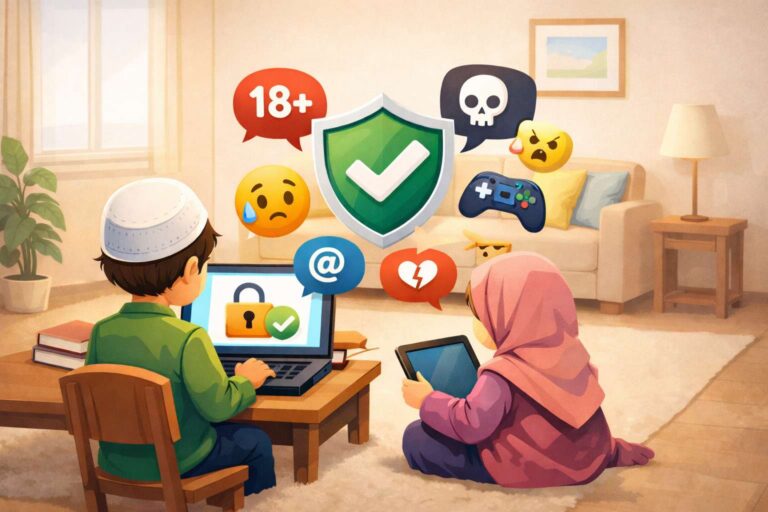
Cyber abuse is one of the most serious challenges children face online today. From cyberbullying and harassment to stalking and impersonation, these threats can harm a child’s emotional well-being and safety.
As a parent, understanding how to prevent, report, and respond to cyber abuse is essential to keeping your child safe online.
The Way to Report Cyber Abuse on Various Social Sites
It is only a little different in the procedure to report cyber abuse on the different social media platforms. However, the point is always the same:
Facebook: On Facebook, to report someone, find their profile, click the dots below their cover image, and hit “Find support or report profile.” Select the three dots at the right corner of the post and press “Find support or report post.” To report a comment, point your cursor over it, click the dots that appear, and select “Find support or report comment.”
Instagram: Open the selected profile, tap the 3 dots to report. Regarding the post, press the 3 dots and report it.
X (formerly Twitter): If you wish to report a tweet, click the three dots next to it and press “Report Tweet.” You will go on to answer a number of questions that expand on the type of abuse. To raise a complaint about a profile, tap the three dots and click “Report”.
TikTok: To report a video, on the next screen, you need to press the Share button (arrow). In case any content requires being reported, visit the profile of the user, press the three dots, and tap on the option of Report.
Snapchat: With Snapchat, press and hold on any Snap or Story, and press report to report. Go to the profile of the user you are sure to report, press three dots at the top right of the screen, and select the option Report.
Always describe in your written report in detail. Although reports are reviewed, not all content will be taken down because platforms follow their own community rules. Continuous reporting of abuse can help protect people on the internet.
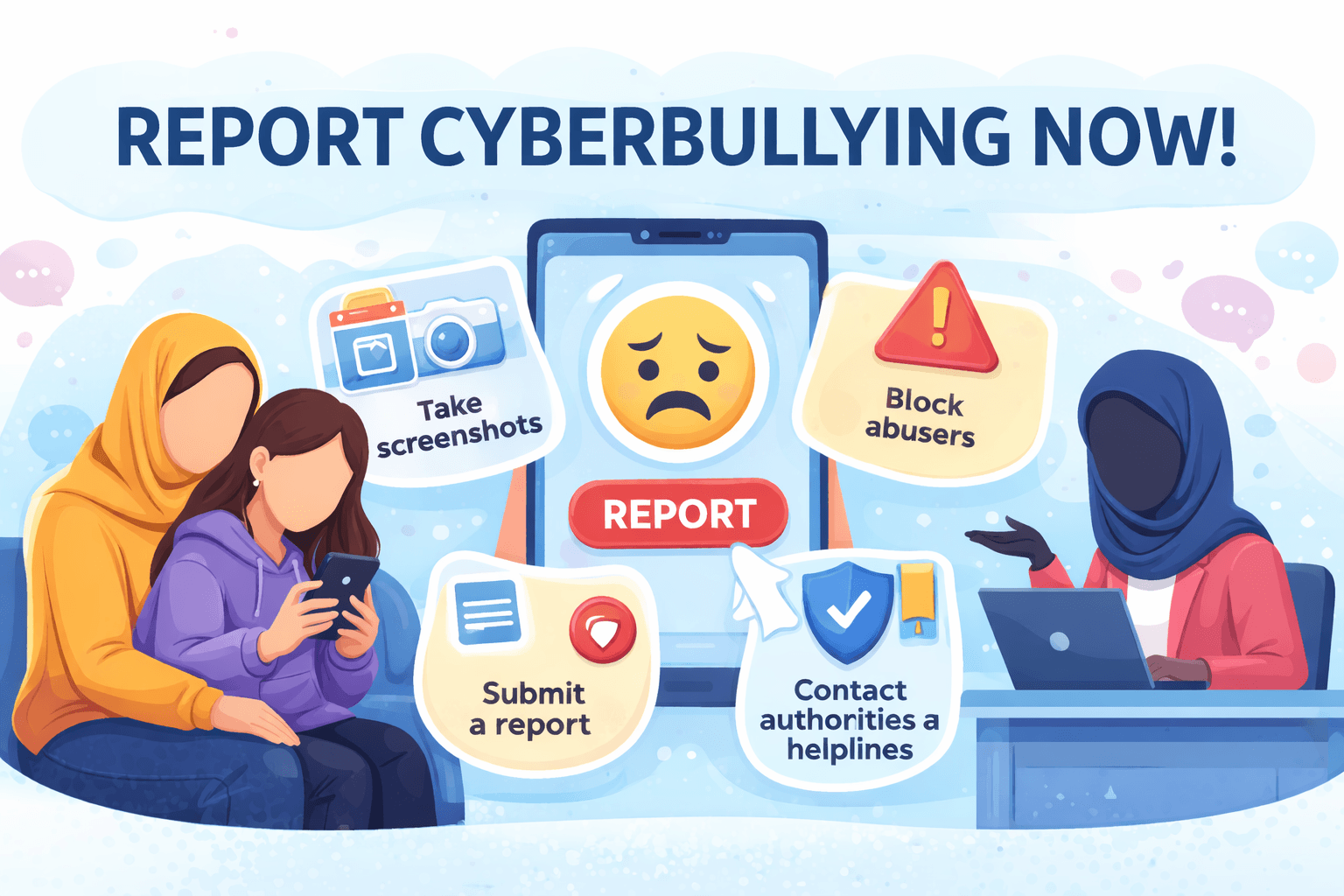
Important Tip
Always:
- Take screenshots of abusive content
- Save links and usernames
- Provide detailed reports
Is Cyberbullying Illegal? What You Need to Know
Being a parent, you may want to know if cyberbullying is illegal or not. Although the legality of cyberbullying can differ from one country to another, in general, it is now being treated as a criminal act. Especially if certain harms are involved. It’s a fact that in most countries, there is no federal law that is specially labeled as cyberbullying. That’s because, to cover these types of cyberbullying incidents, existing laws are applied.
For this reason, cyberbullying may be considered illegal if it involves:
Harassment: Most countries have laws that make it illegal to repeatedly harass someone on purpose. If someone sends irrelevant messages to your child with threats, or being bullied on the internet, they may fall under cyberbullying.
Stalking: In most localities, stalking in any shape is regarded as a criminal offense. It includes sending frequent online messages to someone in a way that makes them or others feel in danger.
Threats of Violence: Some countries strictly ban any kind of threats and violence, both online and offline.
Hate Crimes: Cyberbullying for others’ religion, race, gender, or something like that is considered a hate crime.
Defamation: To defame someone if any person spreads false news and information online, known as Defamation. It is also considered a civil crime.
Child Pornography or Exploitation: Sexual exploitation of children via the internet is taken very seriously and has serious consequences.
Impersonation: It is against the law if you fake others’ identities to either interfere with their lives or take advantage of them.
Revenge Porn: It is considered a crime in most places. The posting of personal videos and pictures of someone without his/her consent is forbidden.
To protect kids and young social media users, many countries have set their own regulations against cyberbullying. By this law, school authorities are bound to inform law enforcement, punish offenders, and file charges against the person. When your child has been the victim of any of such incidents, visit local consultants/lawyers as soon as possible.
Read how to protect kids from cyberbullying.
What is the connection between stalking and cyberbullying?
For parents, you should be more aware of cyberbullying. Teens who experience cyberbullying experience more severe forms of harassment, like being stalked by their abusers. In the beginning, signs of exclusion may not appear serious, but soon, this can progress into danger and risks.
The Connection between Stalking and Cyberbullying:
Continuously Watching:
Cyberbullying often involves a disturbing, constant watch over your child. It might begin with public shaming online. After that, the bully continuously monitors your child’s activities online. This is called cyber-stalking. It’s really so disturbing. That’s why your child can’t use social media peacefully and securely.
Exploiting Personal Information:
To cause harm, the bully can find your child’s sensitive information to expose them to others. By using this information, they can blackmail your child emotionally. Sending unusual messages or threats turns your child’s fear into real life.
Being anonymous online may encourage cyberbullies to do things they would not do in real life. This emboldenment can lead to:
Using false profiles as a way to contact the victim or their connections, keeping an eye on them to ensure they remain afraid.
It means that your personal data can be publicly shared online, and this could threaten your safety.
- Supplying the victim with false information, pictures, or rumors that could lead to a potential assault in any spot.
- Make a group and use abusive words, threaten the victims, and show these actions on the internet.
Such times can cause teens to suffer stress, become pessimistic, and feel fearful. It shows that victims need to get support, especially from their parents. Besides this, Social Media platforms need to act promptly when they observe these kinds of abusive acts. Concerned parents may install Kahf Kids to get the solution and guidelines on protection.
What is a Digital Restraining Order and how does it work?
When your kid is experiencing cyber-bullying, you can hear about a digital restraining order. It is simply a discussion of protection orders (restraining orders) that courts may apply to prevent bad online habits. It is designed to help protect children from threats and harassment. For example, abuse, intimidation, and stalking that take place online.
How it Works for Parents:
1. Application to Court:
- When your child or teen faces cyberstalking, harassment, or credible threats, you should go to court to request a restraining order.
- Contact with any experienced lawyer who is very well known in Cyber law. The lawyer will assist you to prepare the documents that you need to submit to the court.
2. Evidence and Grounds:
- The most important and tough task for parents is collecting strong evidence. Such as: screenshot all abusive messages, posts, or conversations. That might prove that your child is being harassed and threatened by someone.
- The court will go through the provided evidence to establish whether it can issue the order.
3. Release of Order:
Once the judge issues an order (even a temporary one), the abuser must be officially informed about it. This is called “serving” the order. It legally prevents the respondent from carrying out certain online behaviors toward the petitioner.
- Attempting to contact the victim by using any online device (social media, email, messaging apps, and others).
- Directly or indirectly online posting about the victim.
- Sharing the victim’s personal information without their permission.
- Creating fake profiles to interact with or monitor the victim.
4. Service of Process:
- Once a respondent gets the order, they are strictly obligated to obey this. 5. Enforcement and Penalties:
- If an accused person does not obey the court’s rules, they could be fined or required to serve probation or jail time. It is taken very seriously if someone violates a restraining order, regardless of how minor the first cyber abuse was.
For parents, applying for a digital restraining order may be difficult and time-consuming. You must have time and hard facts. But it is quite a powerful legal step you could use to restore the online and offline safety of your child. For better online safety, you can use Kahf Guard.
Steps Taken by Anti-Bullying Groups Against Cyber Abuse
It’s good news to parents that there are many Anti-bullying groups online or offline. Their main goal is to help child and teen victims who are abused or harassed online. You will get various support, assistance and guidelines from them against cyber abuse. Besides victims, they help parents, teachers or any other guardians to stop cyberbullying.
Their efforts often span several key areas.
- Firstly, they assist victims directly, providing helplines, web chats, and counseling. So that young people can safely discuss anything that happened and get support. Many groups also offer practical advice on documenting abuse, reporting to platforms, and understanding legal options.
- Secondly, knowledge and understanding of these issues are important too. They give lessons to schools and communities, explaining how children and teens are affected by cyberbullying, how to avoid cyberbullying, behave properly online, and notice when bullying occurs on the internet.
- Thirdly, they encourage the social media authorities to improve safety measures and reporting. And make it harder for online abusers by applying severe penalties. They also encourage young users to be caring and respectful on the internet. These anti-bullying groups motivate parents to ensure that the internet is safer for all.
Conclusion: Taking a Stand Against Cyber Abuse
Cyber abuse poses a serious risk to young users that needs a team approach and immediate action. Digital technology has created easy options for sharing and learning for kids, but it also leads to harassment and harmful emotions. Combating cyber abuse should involve policies that help children, make sure platforms are responsible, and update the laws.
For every user, prevention has the highest priority, especially for kids and teenagers. Parents can visit Kahf Kids to get tips and tools aimed at securing their children’s time on the internet. Besides these, social media sites should take responsibility for protecting their young users. This means constantly updating their reporting tools, using their guidelines to take action on any violations, and looking for ways to prevent abusive acts. Parents can use Kahf Guard to improve their children’s online safety and prevent various threats on their devices.
Anti-bullying Groups, teachers, and cyber advocates play a crucial role. All their actions in sharing information, supporting victims, and advocating for reform are important for improving online empathy and respect. When we cooperate with each other, cyber abuse can be handled strictly so that the internet is welcoming and safe for all.
More read: Why YouTube is bad for kids.