There’s a moment many parents recognise, even if they’ve never put words to it.
You call your child’s name. Nothing. You call again. Still nothing. They’re not being deliberately rude — they’re simply gone, absorbed into a screen with a focus they’ve never shown during homework or prayer time.
That moment, repeated daily, is worth paying attention to.
Screen use is a normal part of childhood, and managing it doesn’t require alarm or guilt. But there’s a meaningful difference between a child who watches cartoons after school and one who becomes distressed, withdrawn, or dysregulated the moment a device is removed.
Understanding that difference — and knowing what to look for — is one of the most useful things a parent can do right now.
What Is Digital Addiction in Children?
Digital addiction in children refers to a pattern of compulsive screen use that interferes with daily functioning, emotional wellbeing, relationships, or development.
It is not defined by hours alone.
A child who spends two hours a day on screens without distress is in a very different situation from one who spends the same time but becomes angry, anxious, or tearful the moment a device is removed. The role screens play in a child’s emotional life matters more than the clock count.
The American Academy of Paediatrics (AAP) distinguishes between problematic media use and typical screen engagement. When a device becomes a child’s primary source of comfort, stimulation, or social connection — to the exclusion of real-world experiences — that’s when screen dependency becomes clinically meaningful.
Behavioural researchers describe digital addiction using criteria similar to other behavioural dependencies:
- Preoccupation with screens, even when not using them
- Loss of control over use despite wanting to stop
- Withdrawal symptoms (anger, anxiety, despair) when access is removed
- Increasing tolerance — needing more screen time to feel satisfied
- Continued use despite clear negative consequences
Not every child who loves screens meets this threshold. But the pattern matters, and parents are almost always the first to notice it.
Why Children Become Addicted to Screens So Easily
Understanding why children are so susceptible helps parents respond with empathy rather than frustration.
1. The Brain’s Reward System Is Genuinely Involved
Research in developmental neuroscience confirms that platforms built around short-form video, social feeds, and certain game formats trigger dopamine stimulation in the brain’s reward circuitry. Dopamine is released in anticipation of reward — and the unpredictable nature of content feeds creates the same variable reinforcement pattern that makes gambling compelling.
Children’s prefrontal cortexes — the brain region governing impulse control and decision-making — are not fully developed until the mid-twenties. Young children and adolescents have naturally weaker internal brakes against compulsive use.
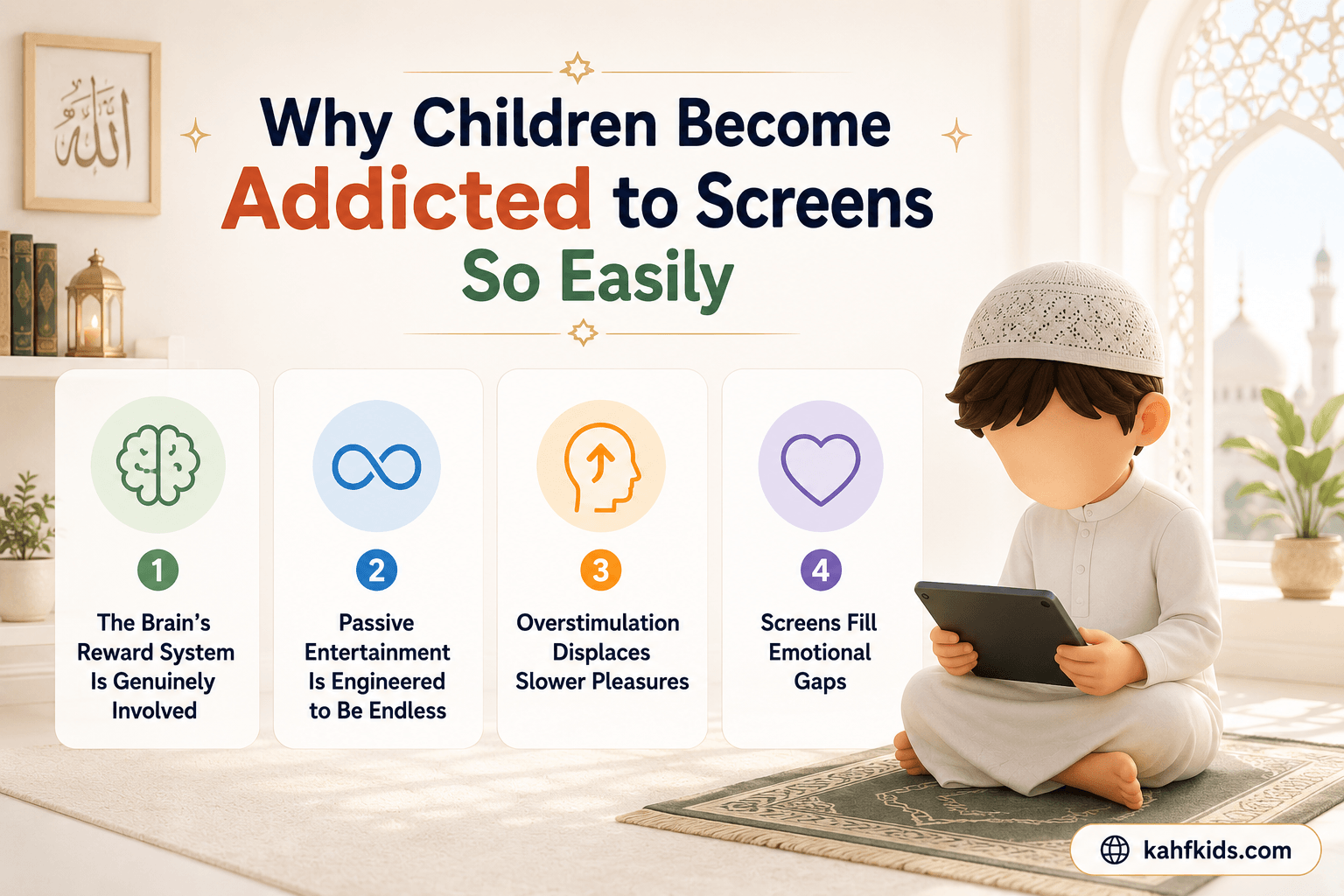
2. Passive Entertainment Is Engineered to Be Endless
Autoplay, infinite scrolling, and recommendation algorithms are not neutral features. They are built by teams of designers specifically to extend engagement. A child picking up a tablet isn’t just watching a video — they’re entering an environment architected to hold their attention.
For parents wondering why YouTube in particular can be problematic for kids, this architecture is a significant part of the answer. The recommendation engine can shift content unpredictably, drawing children toward increasingly stimulating material without any deliberate choices on the child’s part.
3. Overstimulation Displaces Slower Pleasures
When children’s nervous systems are regularly exposed to rapid visual stimulation, the quieter satisfactions of reading, drawing, outdoor play, or conversation begin to feel comparatively dull. This isn’t a moral failing — it’s a neurological calibration.
The Child Mind Institute notes that attention span difficulties are increasingly linked to patterns of high-stimulation media use, particularly when screens are introduced early in development.
4. Screens Fill Emotional Gaps
Children who feel bored, lonely, anxious, or unheard often turn to screens for regulation. This is worth sitting with: sometimes screen dependency is a symptom of an unmet emotional need, not simply a bad habit.
Signs Every Parent Should Watch For
These patterns are worth noting — particularly if they appear consistently or in combination. Context always matters; a single incident is not a diagnosis.
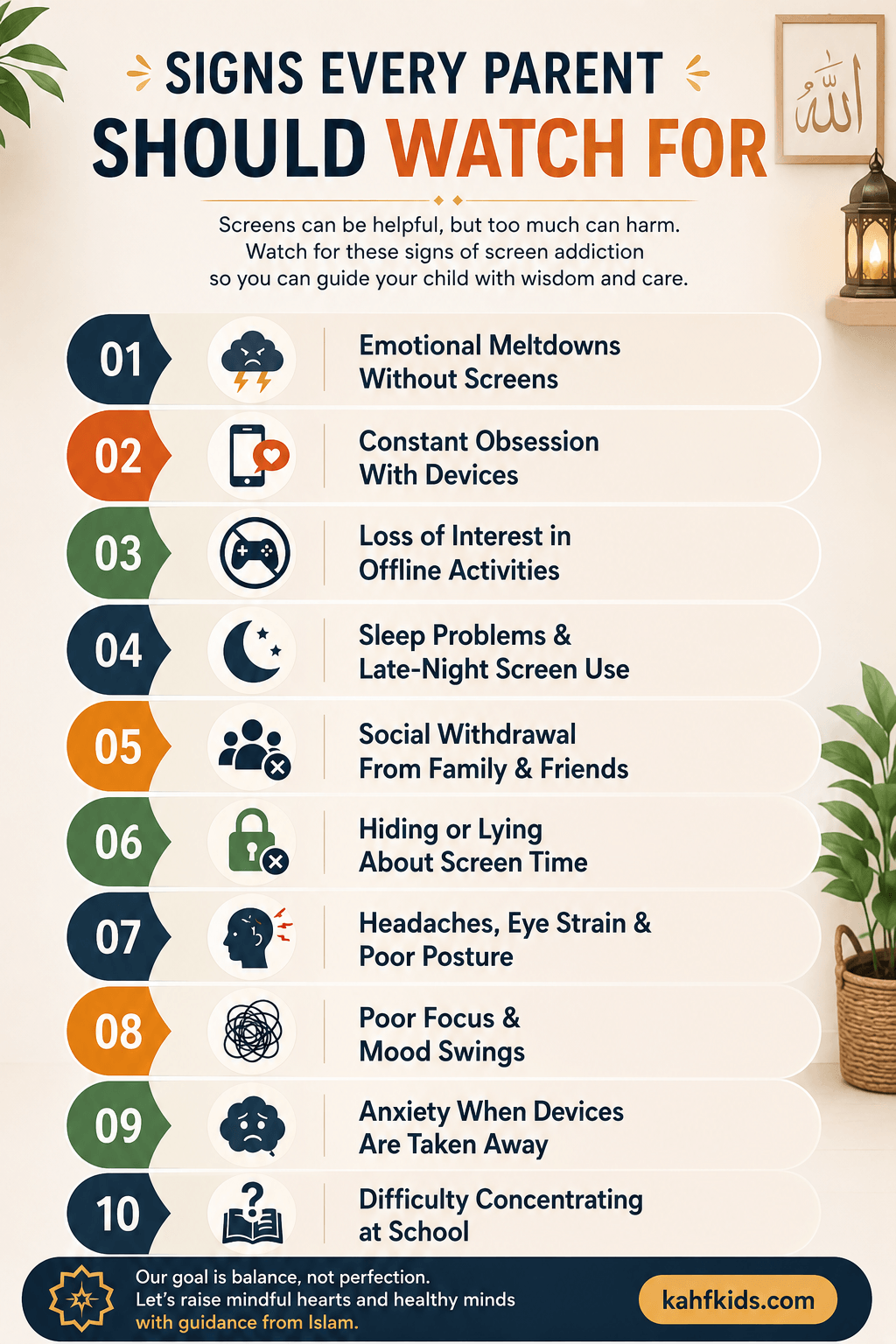
Sign 1 — Emotional Dysregulation When Screens Are Removed
A child who cries, shouts, or has a full meltdown when a device is taken away — in a way that seems disproportionate to the situation — is showing a sign worth taking seriously.
Some frustration is normal. Sustained rage, despair, or aggression is not.
Sign 2 — Preoccupation With Screens When Not Using Them
Constantly asking when screen time will return. Mentally “checked out” during offline activities. Talking almost exclusively about games, videos, or characters. This kind of persistent preoccupation — even in the absence of a device — is a meaningful signal.
Sign 3 — Declining Interest in Previously Enjoyed Activities
A child who used to love football, drawing, or playing with siblings but now shows no interest in anything that doesn’t involve a screen has undergone a real shift in their motivation landscape.
This narrowing of interest is one of the more subtle but significant signs of screen dependency.
Sign 4 — Disrupted Sleep Patterns
The WHO notes that sleep disruption in children is strongly associated with excessive evening screen exposure. Beyond melatonin suppression from blue light, the cognitive arousal screens produce makes winding down genuinely difficult.
Children using screens close to bedtime — or secretly after lights-out — often show daytime irritability and difficulty concentrating that parents may not immediately connect to screen use.
Sign 5 — Social Withdrawal
When children begin choosing online friendships or virtual worlds over family time, playdates, or community activities, it warrants a thoughtful conversation. This is especially significant for older children and adolescents who may be using online spaces to meet social needs that aren’t being met offline.
Sign 6 — Dishonesty About Screen Use
A child who lies about how long they’ve been on a device, hides a phone, or finds workarounds to parental controls is demonstrating a relationship with screens that has crossed into compulsive territory.
Deception of this kind — particularly in younger children — is unusual and worth addressing directly.
Sign 7 — Physical Complaints
Headaches, eyestrain, poor posture, and neck or wrist pain in children who spend long periods hunched over devices are physical indicators that often go unnoticed.
If you’re seeing several of these signs together, it doesn’t mean your child is in crisis — but it does mean the situation deserves intentional attention. Understanding online safety for kids as a whole — not just content, but the emotional dynamics of digital life — is an important part of that response.
How Excessive Screen Exposure Affects Children
Cognitive Development
Research from the Children and Screens Institute highlights that high levels of passive screen use in early childhood are associated with reduced performance in tasks requiring sustained attention and executive function.
The picture is nuanced — screens don’t cause cognitive damage wholesale. But the type of screen use matters enormously. Interactive, educational content in measured amounts differs significantly from hours of passive video streaming.
Emotional Regulation
Children who regularly use screens to escape discomfort miss opportunities to develop the internal coping skills they’ll need throughout life. Emotional regulation is a learned capacity, built through experiencing mild discomfort and navigating it with support.
When screens consistently short-circuit that process, children can become less resilient — not more.
Sleep Architecture
Reduced deep sleep affects memory consolidation, emotional processing, and immune function. Tired children are more irritable and less focused — which often leads parents to offer more screen time as a soothing tool, creating a cycle that compounds over weeks.
Family Connection
When screens become the dominant activity in a household, they erode the low-key moments — dinner conversations, car rides, bedtime chats — that actually build secure attachment. The Children and Screens Institute notes that the quality of family interaction is one of the most significant predictors of healthy childhood development.
Exposure to Harmful Content
Compulsive screen use increases exposure risk. Children spending unsupervised hours online are more likely to encounter content that normalises aggression or inappropriate behaviour.
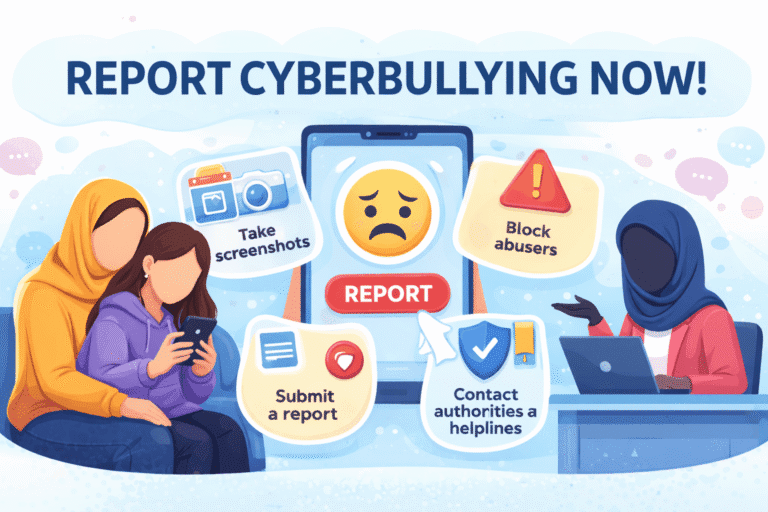
Parents should understand how to protect kids from cyberbullying and know how to report and prevent cyber abuse — because these risks are interconnected with screen dependency.
When Screen Time Becomes a Family Problem
It’s worth naming something many parents feel but rarely say aloud: screens are often a family dynamic, not just a child habit.
Parents who use phones during family meals, who hand a tablet to a toddler to manage exhaustion, or who haven’t established clear digital boundaries themselves will find it genuinely difficult to address their child’s screen relationship in isolation. The household’s digital culture shapes every member’s behaviour.
Some families fall into what researchers call a “compensatory cycle”:
- Child behaves badly when screens are limited
- Parent gives in to restore peace
- Child learns that escalation works
- The threshold for refusal gradually rises
Recognising this pattern is the first step to changing it.
Additionally, children with underlying anxiety, ADHD, social difficulties, or depression are more vulnerable to screen dependency. For these children, screens function as immediate, powerful relief from emotional distress. If screen dependency seems severe or accompanies other mental health concerns, speaking with a child psychologist is a worthwhile step.
What Muslim Parents Can Do to Build Healthier Digital Habits
There is no single correct approach. What works depends on a child’s age, temperament, the family’s circumstances, and the parent’s own capacity. What follows are evidence-informed strategies grounded in both child psychology and Islamic values.
Start with conversation, not rules alone.
Children who understand why a boundary exists internalise it more readily than those who are simply told what to do. A conversation explaining how screens affect sleep, attention, and family connection is more powerful than a timer in isolation.
Create a family media plan.
The AAP recommends that families decide together: which platforms are used, when screens are off (meals, one hour before bed, prayer time), and what the expectations are. When children help shape the plan, they’re more invested in following it.
Designate screen-free spaces and times.
Bedrooms, dinner tables, and prayer times are natural candidates. Consistency matters more than perfection — a family maintaining these boundaries 80% of the time is doing meaningful work.
Replace, don’t just remove.
Children need engaging alternatives. Outdoor activities, creative projects, reading, cooking together, and time with friends all compete with screens — but only if they’re genuinely available. For parents seeking safe games for kids that offer real engagement without algorithmic risk, curated options exist that prioritise substance over stimulation.
Model the behaviour you want to see.
A parent who reads during meals, engages in conversation, and puts their phone away during family time communicates something profound — that people are more interesting than devices.
Use Kahf Kids as a tool for intentional engagement.
Rather than eliminating screens entirely — which is neither realistic nor necessary — consider redirecting screen time toward content that actually serves your child’s growth.
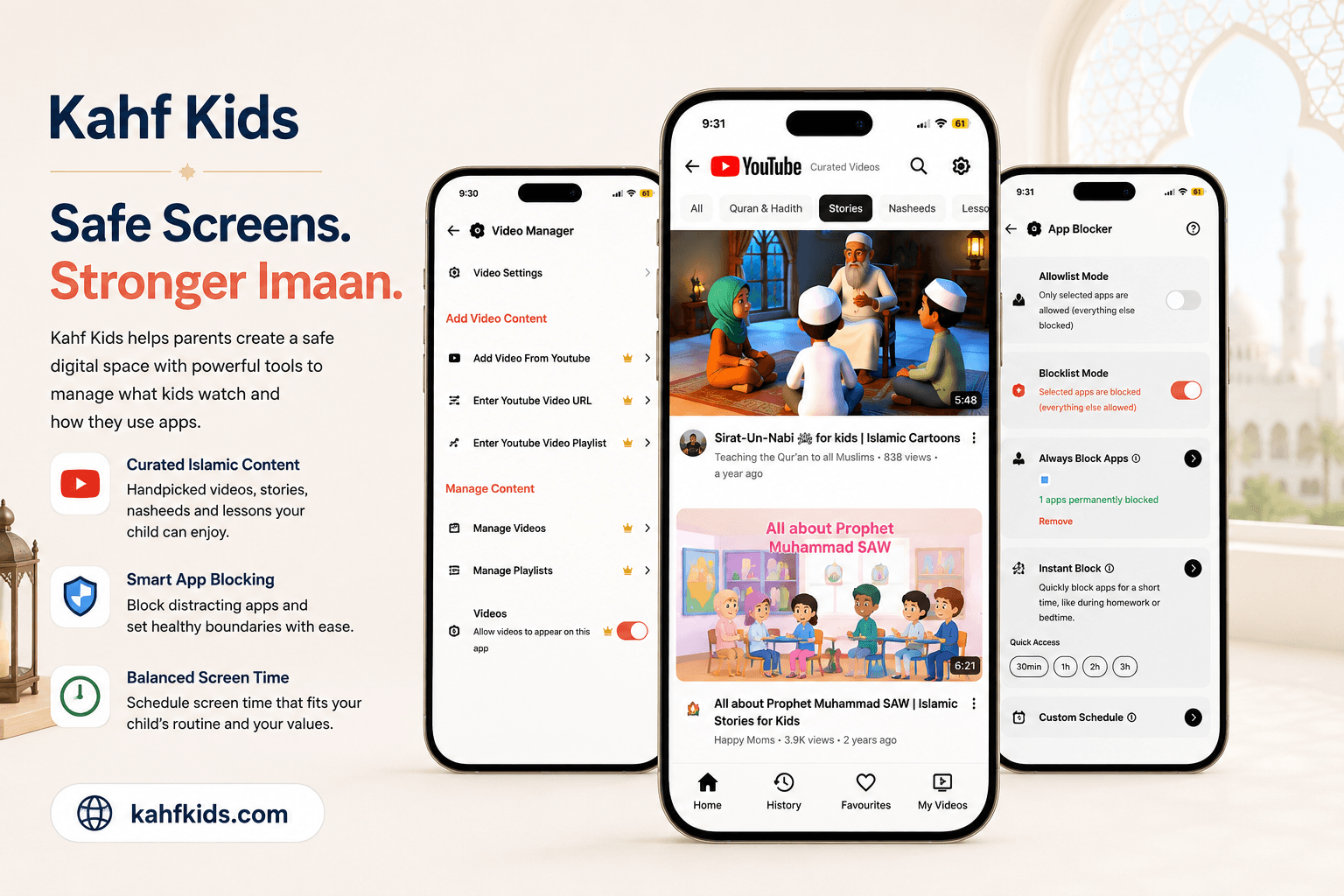
Kahf Kids is built as an intentional digital alternative: an Islamic edutainment platform offering age-appropriate content rooted in Islamic values and child development principles. It includes parent control features that let families manage access, set time limits, and ensure digital time supports the values being cultivated at home — not undermines them.
If children are going to engage with screens, the quality and intention of that content matters enormously. Download the Kahf Kids app and experience what purposeful screen time actually looks like.
Address the emotional need underneath.
If a child turns to screens primarily when bored, lonely, or anxious, removing the screen alone won’t solve it. More connection time, greater emotional attunement, and helping children name their inner experiences all reduce the pull of escapist screen use.
For families navigating the broader project of raising righteous Muslim children in a media-saturated world, intentional digital parenting is simply one dimension of something larger: raising children who are rooted, reflective, and spiritually conscious.
Healthy Technology Use in Islam
Islam’s guidance on moderation, intentionality, and the stewardship of time offers a coherent framework for digital parenting — not as a list of prohibitions, but as a positive vision of how to live well.
“By time, indeed, mankind is in loss — except for those who have believed and done righteous deeds and advised each other to truth and advised each other to patience.”
— Surah Al-Asr (103:1–3)
This short surah frames time itself as precious and finite. When we consider how many childhood hours are spent in passive screen consumption — hours that could be spent in learning, connection, creativity, or worship — the message feels remarkably contemporary.
“There are two blessings which many people lose: health and free time.”
— Prophet Muhammad ﷺ (Bukhari)
Free time was understood not as an absence of structure, but as an opportunity for something better. The question digital parenting asks, in Islamic terms, is: what are we filling our children’s free time with?
The principle of wasatiyyah — the Islamic middle way — is especially relevant here.
“And thus We have made you a community of the middle way.”
— Surah Al-Baqarah (2:143)
Technology used with intention, in measured amounts, for beneficial purposes, is not haram. Technology that consumes a child’s attention to the exclusion of prayer, learning, and family is a form of excess that wasatiyyah counsels against.
“O you who have believed, protect yourselves and your families from a Fire whose fuel is people and stones.”
— Surah At-Tahrim (66:6)
Parents bear responsibility for what they permit to enter their children’s minds and hearts. This includes content that flows through a screen, unchecked, for hours each day.
The Qur’an also reminds us of the importance of reflection:
“Do they not reflect within themselves?”
— Surah Ar-Rum (30:8)
A child whose mind is constantly occupied with passive entertainment has little space left for the quiet inward attention that reflection requires.
It’s worth noting that Islam does not treat entertainment as inherently problematic. Leisure, play, and joy are acknowledged in the Sunnah. What matters is that entertainment remains in its proper place — as a refreshment that restores energy for meaningful engagement, not as a substitute for it.
“And We have certainly honoured the children of Adam.”
— Surah Al-Isra (17:70)
That honour is expressed in how we raise them — with attention, intention, and care. Protecting a child’s mind from overstimulation and compulsive use is part of fulfilling that honour.
Frequently Asked Questions About Digital Addiction in Children
What are the signs of screen addiction in children?
The key signs include emotional outbursts when screens are removed, preoccupation with devices when not using them, declining interest in offline activities, disrupted sleep, social withdrawal, and dishonesty about screen use. No single sign confirms addiction, but a consistent cluster of these patterns — appearing over time — warrants parental attention.
How much screen time is unhealthy for children?
The AAP recommends no screen time (except video calling) for children under 18–24 months, limited high-quality programming for ages 2–5, and consistent limits for school-age children. Unhealthy screen time is defined less by hours and more by impact: if screens are disrupting sleep, replacing physical activity, or causing emotional dysregulation, the amount is too much — regardless of the clock count.
Can screen addiction affect a child’s behaviour?
Yes. Research consistently links excessive screen use with increased irritability, impulsivity, reduced frustration tolerance, and emotional dysregulation. The Child Mind Institute notes that high-stimulation screen content can make it harder for children to tolerate everyday boredom and frustration — because their baseline for stimulation has shifted upward.
What does Islam say about excessive entertainment?
Islam values moderation (wasatiyyah) in all things, including leisure. The Qur’an warns against ghafla — heedlessness, a state of forgetfulness of Allah and one’s responsibilities. Entertainment that displaces prayer, learning, family connection, or personal development falls outside the balance that Islamic values prescribe.
How can Muslim parents reduce screen addiction in their children?
Muslim parents can reduce screen addiction by creating a family media plan with clear boundaries, designating screen-free times during salah and meals, replacing passive entertainment with engaging alternatives, modelling healthy digital habits themselves, and using intentional platforms like Kahf Kids that align with Islamic values. Addressing the emotional needs that screen use may be meeting — boredom, loneliness, anxiety — is equally important.
At what age should children have their own device?
Child development experts generally advise delaying personal smartphone ownership until at least age 12–13 — and even then with robust parental monitoring. The question worth asking is not whether a child wants a device, but whether they have the emotional maturity and self-regulation to use it responsibly.
What should I do if I think my child already has a screen addiction?
Start with a calm conversation rather than an abrupt removal of devices, which can escalate conflict. Work with your child to create a gradual reduction plan. Increase offline alternatives and family engagement. If the dependency seems severe — affecting school, friendships, sleep, or mental health — consider speaking with a paediatrician or child psychologist. The situation is manageable; it simply requires sustained, consistent effort.
Final Thoughts
Parenting in a screen-saturated world is genuinely hard. There’s no perfect household, no flawless digital plan, and no parent who hasn’t handed a phone to an upset child at a moment of exhaustion. That’s not failure — it’s humanity.
What matters is direction, not perfection.
A family moving — however imperfectly — toward more intentional screen use, more meaningful connection, and more conscious digital choices is doing the work that matters. The signs of digital addiction in children are not there to frighten parents. They’re there to inform us, so we can respond thoughtfully.
The Islamic tradition, with its profound wisdom about time, balance, and the protection of those in our care, offers not a list of rules but a way of seeing — one that makes the path forward clearer.
If your child loves screens, that’s not the problem. The question is whether their relationship with technology serves their growth, their faith, and their connection to the people who love them.
Ready to make screen time meaningful?
Kahf Kids offers educational Islamic content designed for children aged 4 to 12 — a platform built on the belief that intentional technology can be a genuinely positive part of a child’s world.