Kahf Kids vs Bark: Two Different Tools, Built for Two Different Ages
Short answer: for children aged 4-12, Kahf Kids is the better choice — it prevents exposure and includes halal content; Bark is a monitoring tool better suited to teenagers. Most "Kahf Kids vs Bark" comparisons miss this. The two apps are not really competing for the same job: Bark is built to monitor teenagers, Kahf Kids is built to protect younger children. Choosing between them starts with one question — how old is your child?
This guide is written for Muslim parents trying to decide which approach fits their family. We will be honest about what Bark does well — and clear about why, for children roughly ages 4 to 12, a different tool usually makes more sense.
The 30-Second Snapshot
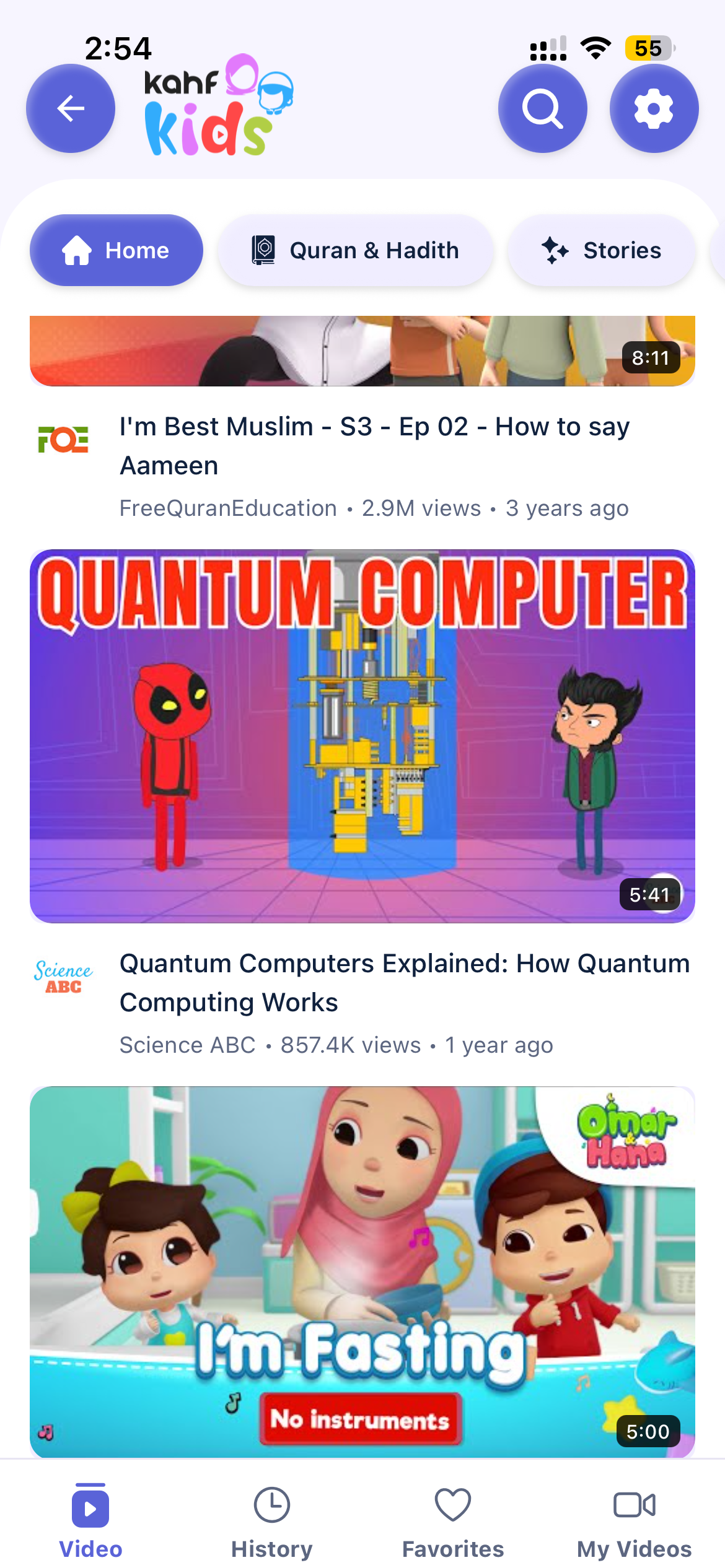
| Quick comparison | Kahf Kids | Bark |
|---|---|---|
| The big picture | ||
| Built mainly for | Children 4-12 | Teens 13-17 |
| Core approach | Prevention — block & replace | Detection — monitor & alert |
| Acts before exposure | Yes | Alerts after |
| Built for Muslim families | Yes | Generic |
| Content & learning | ||
| Halal video library | 30,000+ videos | None |
| Built-in Quran reading app | Yes | No |
| Learning games & drawing | Yes | No |
| Parents add YouTube videos themselves | Yes, ad-free | No |
| Controls & safety | ||
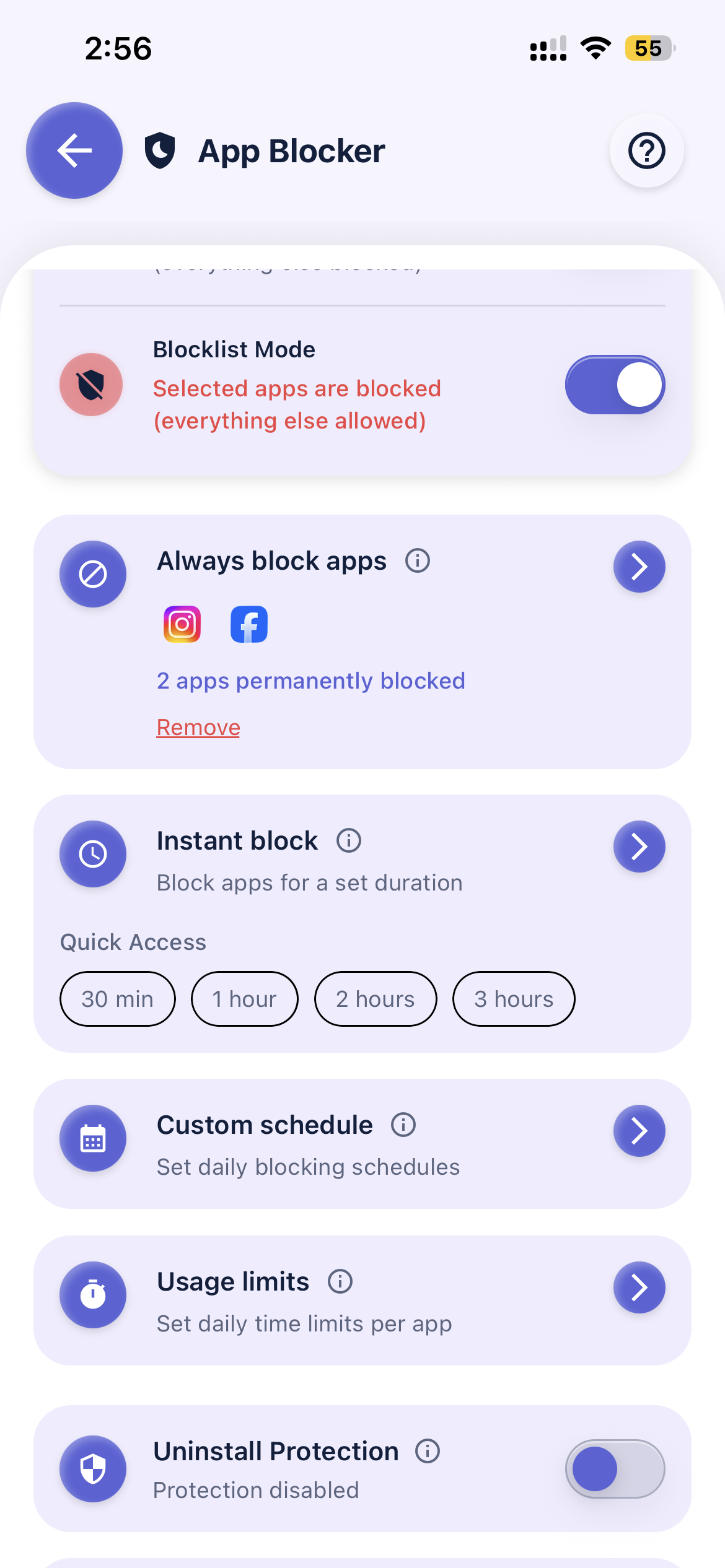
| Blocks apps (YouTube, TikTok) | Yes | Schedules only |
| Blocks YouTube video content | Yes | No |
| Website filtering | Yes | Yes |
| Games Blocker | Yes | Schedules only |
| Screen time scheduling | Yes | Yes |
| Message & social-media monitoring | On roadmap | Yes — 30+ apps |
| GPS location tracking | On roadmap | Yes |
| Practical details | ||
| Yearly price | $29.99 | ~$99 (Premium) |
| Free trial | 14 days, no card | 7 days, card required |
| Smart TV support | Yes | No |
Bark pricing reflects US plans (Bark Premium ~$99/year, Bark Jr ~$49/year). "Schedules only" means Bark can restrict when an app is available but does not block the app or its video content outright. Last verified May 2026.
What Each App Actually Is
Bark, in plain terms
Bark launched in 2015 and built its reputation on one idea: instead of locking a child's phone down, it watches what happens on it. Bark's AI scans text messages, emails, and more than 30 social and messaging apps, looking for signs of bullying, predatory contact, self-harm, drugs, and explicit material. When it spots something concerning, it sends the parent an alert.
That design is deliberate — Bark markets itself as a tool that respects a teenager's privacy by not showing parents every message, only the flagged ones. For a 15-year-old with Snapchat, Instagram, and a group chat full of classmates, that philosophy has genuine appeal. Bark also offers screen-time schedules, website filtering, location tracking, and its own hardware: the Bark Phone and the Bark Home router device.
The key thing to understand: Bark is a monitoring service. It is not designed to block a young child from reaching content in the first place — and it has no content of its own.
Kahf Kids, in plain terms
Kahf Kids starts from the opposite end. Rather than watching what a child does and reporting back, it is built to keep harmful content away before the child ever encounters it — and to fill the space with something better. It blocks apps, websites, and games at the system level, and provides a library of 30,000+ Mufti-approved videos, a built-in Quran reading app, Islamic stories, and learning games.
This fits how younger children actually use devices. A 7-year-old does not need their direct messages scanned — they need YouTube's rabbit holes closed off and a safe, engaging alternative ready in their place. Kahf Kids is used by more than 300,000 families worldwide, is endorsed by leading Islamic scholars, and runs on Android, iOS, web, Android TV, Fire TV, and Google TV. It carries Google Play's "Teacher Approved" badge.
The Real Divide: Detection vs Prevention
Every child-safety app sits somewhere on a line between two philosophies. Understanding where Bark and Kahf Kids sit on that line tells you almost everything you need to know.
- Child uses their phone freely
- Bark's AI scans messages and apps in the background
- Something harmful reaches the child
- Bark sends the parent an alert
- Parent responds — after the exposure has happened
- Unsafe apps, sites, and games are blocked from the start
- A halal content library is ready in their place
- Harmful content does not reach the child
- No alert is needed
- The parent has prevented the problem, not chased it
Neither philosophy is wrong — they suit different ages. A teenager is going to have a social life on their phone whether parents like it or not; for them, monitoring with alerts is a realistic middle ground between total lockdown and no oversight at all. That is the situation Bark is designed for.
But a 6, 8, or 10-year-old is in a different situation entirely. They do not need freedom on a smartphone that is then watched — they need a smaller, safer digital world to begin with. For that age, an alert that something already went wrong is far less useful than making sure it never reaches them. By the time Bark notifies a parent, a young child has already seen the content.
What They Cost
Pricing reflects how different these products are. Bark is sold as a premium monitoring service; Kahf Kids is priced as an everyday family app. For a US family, Bark Premium runs about $99 per year (or roughly $14 per month), with a cut-down tier — Bark Jr — at about $49 per year. Kahf Kids is $29.99 per year, or $4.99 per month.
- 30,000+ Mufti-approved videos
- App, Website & Games Blocker
- Built-in Quran reading app
- Learning games & drawing pad
- Parents add their own YouTube videos
- Watch Time Limit & App Schedule
- Works on phones, tablets, web & smart TVs
- AI monitoring of 30+ messaging & social apps
- Alerts for bullying, predators, explicit content
- GPS location tracking & check-ins
- Screen-time schedules & website filtering
- No content library of any kind
- No Quran app or learning tools
- No smart TV support · phones & computers only
The price gap is not really the headline, though. The honest point is this: they are not priced differently because one is a worse deal — they are priced differently because they do different jobs. Paying $99 a year for Bark to monitor a 7-year-old who has no social media accounts means paying a premium for features that child will not use for years. Paying $29.99 for Kahf Kids buys controls and content that a 7-year-old uses every single day.
One detail worth knowing before any free trial: Bark asks for a credit card up front and places a small charge to begin the trial. Kahf Kids' 14-day trial takes no card at all, so there is nothing to remember to cancel. As a general habit with any subscription, read the billing terms on the signup screen before confirming.
Feature Differences That Actually Matter
Rather than a long checklist, here are the six differences that genuinely change the day-to-day experience for a family with young children — grouped by what each app is built to do.
What Bark Does Well — And Who Should Use It
A comparison that only criticised Bark would not be honest, and would not help you. Bark is one of the most established names in child safety for a reason. Here is where it genuinely earns its place.
Its AI monitoring is legitimately strong. Bark does not just match keywords — it reads context, so it can tell the difference between a joke and a real warning sign in a teenager's messages. For a parent of a 15-year-old, getting a focused alert about a genuinely concerning conversation — without having to read every private message — is a thoughtful middle path. It respects a teen's growing need for privacy while still catching serious danger.
Its breadth is real too. Coverage of 30+ social and messaging platforms, GPS location with check-ins, and optional hardware like the Bark Phone and Bark Home give families of teens a wide safety net. For an older child who already lives partly online, that breadth is valuable.
So Bark is a reasonable choice if: your child is a teenager (roughly 13+), already has their own social media accounts, and you want awareness of serious risks rather than total control. That is the family Bark was built for, and for that family it does a capable job.
It is simply not the right tool if your child is 4 to 12, does not yet have social media, and what you actually need is to keep unsafe content away and give them something good to watch and learn from. That is a prevention job — and it is the job Kahf Kids was built to do.
Match Your Family to a Tool
Three situations that come up often for Muslim parents. These are general examples to help you find the closest fit — not specific real families. Note that the right answer is not always Kahf Kids: the goal is the tool that fits your child's age and stage.
The children are still in primary-school years. There are no Snapchat or Instagram accounts to monitor. What the parents actually need is to close off YouTube's rabbit holes, block games during study time, and have safe, enjoyable content the children can turn to instead — including on the family TV.
One child is 8 and needs safe content and prevention-based controls. The other is 16, has an active social life online, and the parents want awareness of serious risks without reading every message. A single app is unlikely to serve both stages well.
All the children are 14 or older and well established on social media. Full content lockdown is neither realistic nor age-appropriate. The parents mainly want a safety net — to be alerted if something seriously wrong appears in their teens' online lives.
Reading the Reviews Honestly
About Kahf Kids
Kahf Kids holds strong ratings — 4.5★ on Google Play across 1,820+ reviews and 4.4★ on the App Store. Muslim parents most often mention the halal content library and the relief of younger children no longer being pushed toward harmful content by recommendation algorithms. As with any app, the best approach is to read the recent reviews yourself before deciding.
About Bark
Bark is widely used and has many genuinely positive reviews — including parents who credit its alerts with catching a serious problem early. It is a respected product. That said, its picture on independent review platforms is mixed: alongside the praise, some parents on Trustpilot and the app stores raise recurring points worth being aware of.
The themes that come up most often are setup being more complex than expected, alerts arriving slowly or inconsistently in some testing, and — on iOS especially — children being able to pause or remove the app. A second, more reflective theme appears in teen-written reviews: some young people describe the monitoring as feeling like surveillance, and a few families mention it creating tension or straining trust at home. That is not a knock on Bark's technology — it is the honest reality of any monitoring approach, and something each family should weigh for their own child's temperament.
Before subscribing to Bark — or any child-safety app — it is worth a few minutes reading recent parent reviews directly. You can check Bark's current feedback on its Trustpilot review page, its App Store listing, and its Google Play listing. Reading both the positive and the critical reviews — particularly around setup, alert reliability, billing, and how monitoring affected family trust — will give you a balanced picture. We would encourage the same for Kahf Kids: read the reviews, use the free trial, and decide what genuinely fits your family.
Common Questions
Is Bark or Kahf Kids better for young children?
Does Bark block YouTube and harmful content?
What is the difference between Bark and Kahf Kids?
How much does Bark cost compared to Kahf Kids?
Can a child turn off or uninstall Bark?
Does Kahf Kids monitor my child's messages like Bark?
Is Bark good for Muslim families?
Which app is better value for a Muslim family with young kids?
The Bottom Line
Kahf Kids and Bark are not really rivals. They are tools for two different chapters of childhood, and the right choice follows directly from your child's age.
Choose Kahf Kids if your child is roughly 4 to 12. At that age, prevention beats detection: you want unsafe apps and sites blocked before they are ever seen, and you want a halal alternative — 30,000+ Mufti-approved videos, a Quran reading app, learning games — ready in their place. Kahf Kids does that, on phones, tablets, and the family TV, for $29.99 a year.
Consider Bark if your child is a teenager already living part of their life on social media. Monitoring with alerts is a sensible middle path at that age, and Bark does it as well as anyone. If that is your situation, read its recent reviews, weigh the privacy trade-off honestly, and decide what suits your teen.
For the 300,000+ Muslim families already using Kahf Kids — most of them raising children in exactly the 4-to-12 range — the prevention-first approach is not a compromise. It is the right tool for the age their children are right now.
If your child is in that age range, Kahf Kids is worth trying — it is built specifically for Muslim children, with halal content, Quran tools, and Islamic learning at its core rather than added as an afterthought. The 14-day trial needs no credit card, so it costs nothing to see whether it fits your family.
Protecting a Child Aged 4-12?
Kahf Kids blocks what shouldn't reach them and gives them something better instead.
14-day free trial. No credit card required. Join 300,000+ Muslim families.